Strawberry Jam Recipe Canning – A Simple, Reliable Method
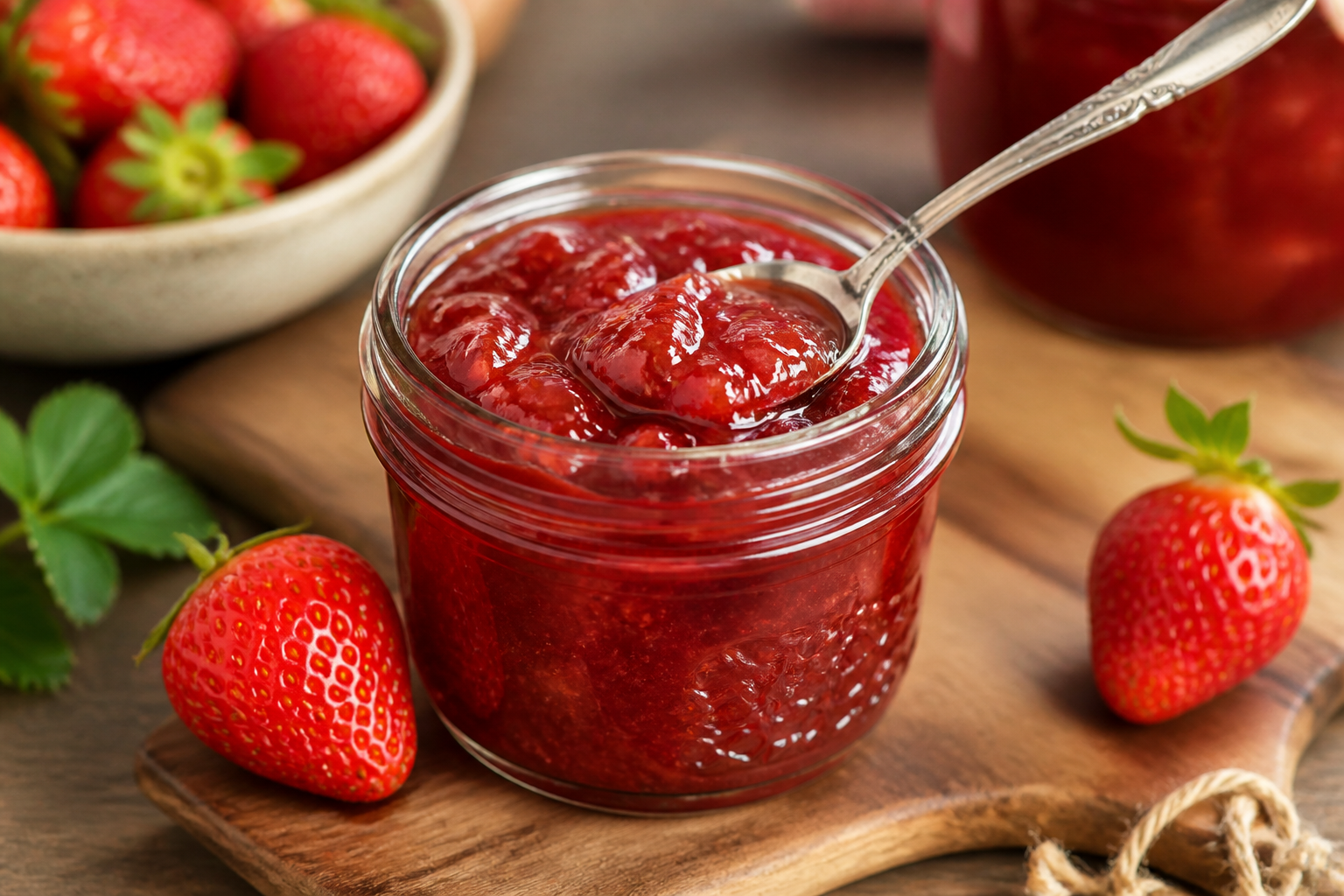
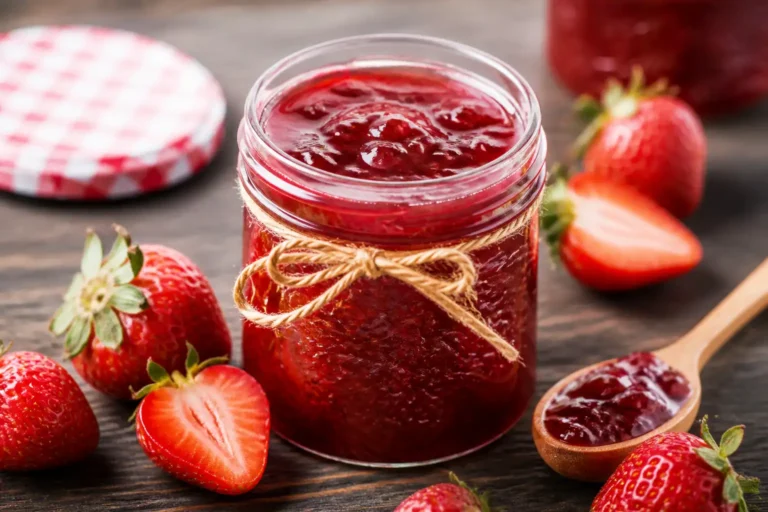
Fresh, homemade strawberry jam tastes like summer in a jar. If you’ve wanted to try canning but felt unsure where to start, this recipe keeps it clear and stress-free. You’ll get bright flavor, a beautiful set, and jars you can safely store on your pantry shelf.
With a few tools and simple steps, you’ll have jam ready for toast, yogurt, or gifting. Let’s make it smooth, safe, and satisfying from start to finish.
What Makes This Special
Reliable set without guesswork: This recipe uses pectin for a consistent, spoonable jam.
Safe for shelf storage: Water-bath canning ensures a sealed, stable product.
Fresh, true strawberry flavor: Balanced sugar and lemon keep the berries front and center.
Small-batch friendly: Works well whether you’re canning 4 jars or 8.
What You’ll Need
- Strawberries: 4 cups crushed (about 2 pounds whole, hulled)
- Granulated sugar: 4 cups
- Lemon juice: 2 tablespoons (bottled for consistent acidity)
- Powdered fruit pectin: 1 packet (1.75 oz)
- Unsalted butter (optional): 1/2 teaspoon to reduce foam
- Equipment: 6–7 half-pint (8 oz) canning jars with lids and bands, large pot or water-bath canner, jar lifter, canning funnel, ladle, clean towels, bubble remover or nonmetallic spatula
How to Make It
- Prep the canner and jars: Fill your canner with enough water to cover jars by 1–2 inches. Bring to a simmer.
Wash jars, lids, and bands in hot soapy water; keep jars hot until filling.
- Prep the strawberries: Rinse, hull, and crush berries with a potato masher. Measure exactly 4 cups of crushed fruit. Stir in bottled lemon juice.
- Mix pectin and fruit: In a large, heavy pot, whisk pectin into the fruit until dissolved.
Add butter if using to prevent excessive foam.
- Bring to a full boil: Over high heat, bring the mixture to a rolling boil you can’t stir down. Stir constantly to prevent scorching.
- Add sugar all at once: Pour in all the sugar, stirring until fully dissolved. Return to a full rolling boil and boil hard for 1 minute, stirring constantly.
- Check for set (optional): Jam should sheet slightly from a cold spoon or reach about 220°F at sea level.
If it drips in thick drops, it’s ready.
- Skim foam: Remove from heat. Skim off any foam with a spoon for a clearer finish.
- Fill the jars: Using a funnel, ladle hot jam into hot jars, leaving 1/4-inch headspace. Wipe rims clean, center lids, and screw bands on until fingertip tight.
- Process in water bath: Place jars in the simmering canner.
Ensure 1–2 inches of water covers the lids. Bring to a boil and process for 10 minutes (adjust for altitude if needed).
- Cool and check seals: Remove jars and let rest 12–24 hours undisturbed. Lids should be concave and not flex when pressed.
Any unsealed jars go in the fridge.
Storage Instructions
- Sealed jars: Store in a cool, dark place up to 12–18 months for best quality.
- After opening: Refrigerate and use within 3–4 weeks.
- Unsealed jars: Refrigerate immediately and use within 3–4 weeks, or freeze up to 6 months.
- Labeling: Add date and batch notes so you can track freshness.
Health Benefits
- Vitamin C: Strawberries are rich in vitamin C, supporting immune health and collagen.
- Antioxidants: Natural compounds like anthocyanins help fight oxidative stress.
- Portion control: Jam is sweet; enjoy in small servings for flavor without overdoing sugar.
- No preservatives needed: Safe canning methods and acidity handle the preservation.
What Not to Do
- Don’t reduce the sugar drastically when using traditional pectin; it may not set and can affect safety. Use low-sugar pectin if you want to cut sugar.
- Don’t skip bottled lemon juice, which provides consistent acidity for proper set and safety.
- Don’t guess on processing time or headspace; both affect seals and shelf stability.
- Don’t can with overripe or moldy berries; quality in equals quality out.
- Don’t tighten bands after processing; this can break the seal.
Recipe Variations
- Low-Sugar Jam: Use low- or no-sugar pectin and follow the package ratio. Sweeten to taste with less sugar or a sugar alternative approved for canning.
- Strawberry-Vanilla: Add 1 scraped vanilla bean or 1 teaspoon pure vanilla off the heat after boiling.
- Strawberry-Balsamic: Stir in 1–2 teaspoons good balsamic vinegar after cooking for a deeper note.
- Strawberry-Lemon: Add 1 tablespoon finely grated lemon zest during the boil for brightness.
- Mixed Berry: Swap up to half the strawberries with raspberries or blueberries; keep total crushed fruit at 4 cups.
FAQ
Do I have to use pectin?
No, but without pectin you’ll need a longer cook to reach gel stage, which can mute fresh flavor.
Pectin gives a reliable set with less cooking.
Can I use frozen strawberries?
Yes. Thaw completely, drain excess liquid, and measure 4 cups crushed. Frozen fruit often has excellent flavor.
How do I adjust for altitude?
Add 1 minute of processing time for every 1,000 feet above 1,000 feet.
For example, at 4,000 feet, process 13 minutes.
Why is my jam runny?
Common causes include under-boiling after adding sugar, incorrect measurements, or old pectin. You can re-cook with a bit more pectin following package directions.
How many jars does this make?
Typically 6–7 half-pints, depending on how juicy the berries are and boil-off.
Can I double the batch?
It’s better to make two separate batches. Large pots can hinder a good boil and lead to a soft set.
Is it safe to reduce sugar?
Yes, but only with low- or no-sugar pectin designed for reduced-sugar recipes.
Follow the pectin instructions closely.
Final Thoughts
Homemade strawberry jam is simple, fast, and rewarding when you follow a few key steps. Measure carefully, keep your boil strong, and process your jars for a dependable seal. With this method, you’ll have bright, fresh flavor on your shelf for months—and a go-to gift everyone loves.
Enjoy your jars, and don’t forget to label your next favorite batch.