Best Ever Easy Sourdough Bread Recipe (Step-by-Step) – Simple, Reliable, Delicious
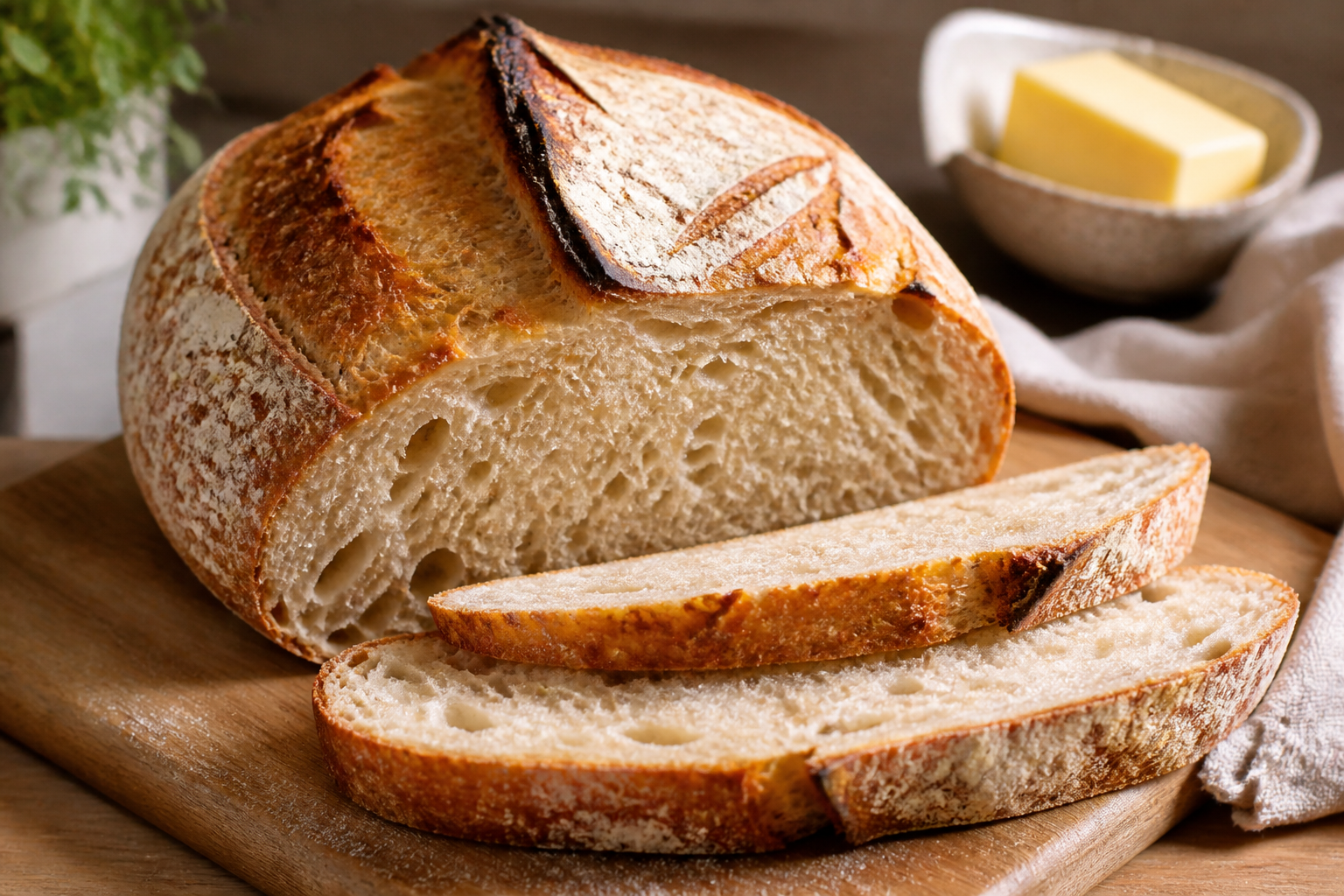
Sourdough doesn’t need to be fussy. With a happy starter and a little patience, you can bake a golden, crackly loaf that tastes like it came from a bakery. This recipe keeps the process simple and repeatable, even if you’re new to sourdough.
You’ll learn what to watch for, how the dough should feel, and when to bake for the best oven spring. Get your starter ready, and let’s make a loaf you’ll be proud of.
What Makes This Recipe So Good
- Beginner-friendly method: Clear timing, simple steps, and no complicated techniques.
- Great crust, tender crumb: Crisp exterior with a soft, slightly chewy interior full of flavor.
- Flexible schedule: Options for same-day or overnight cold proofing.
- Minimal equipment: A Dutch oven helps, but you can bake on a sheet or stone.
- Balanced flavor: Mild tang that suits everything from toast to sandwiches.
Shopping List
- Active sourdough starter (100% hydration, bubbly and doubled within 6–8 hours)
- Bread flour (you can sub part with all-purpose)
- Whole wheat flour (optional but recommended for flavor)
- Water (room temperature)
- Fine sea salt
- Rice flour (for dusting the basket; optional)
Step-by-Step Instructions
- Feed Your Starter (Morning): Make sure it’s active and bubbly. It should pass the float test or visibly dome in the jar.
Plan to mix dough when the starter is at its peak.
- Mix the Dough (Autolyse Optional): In a bowl, combine 350 g water with 100 g active starter. Stir in 400 g bread flour and 50 g whole wheat flour until no dry bits remain. Rest 20–30 minutes to hydrate.
- Add Salt: Sprinkle in 9 g fine sea salt and the remaining 20–30 g water (as needed).
Pinch and fold until the dough is cohesive. It should feel tacky but not soupy.
- Early Strength Building (First Hour): Perform 3 sets of stretch-and-folds every 20 minutes. With wet hands, lift one side of the dough and fold over itself, turning the bowl and repeating 4 times per set.
The dough will smooth out and tighten.
- Bulk Fermentation: Cover and rest at 75–78°F (24–26°C) for 3–5 hours total from mixing, until the dough is puffy, jiggles when you shake the bowl, and has risen about 50%. Look for small bubbles along the sides.
- Pre-Shape: Lightly flour the counter. Gently turn the dough out, pat into a loose rectangle, and fold the edges toward the center.
Flip seam-side down and use a bench scraper to tuck into a loose round. Rest 15–20 minutes.
- Final Shape: For a round loaf, flip the dough seam-side up, fold top to center, sides in, then roll down to create tension. Place seam-side up in a floured banneton (rice flour prevents sticking) or a towel-lined bowl.
- Proof: Option A: Room temp 45–75 minutes until slightly puffy.
Option B: Cold proof in the fridge 8–16 hours for deeper flavor and easier scoring.
- Preheat the Oven: Place a Dutch oven with lid inside and preheat to 475°F (246°C) for at least 30 minutes. If baking on a stone or sheet, also add a steam tray.
- Score and Bake: Turn the dough onto parchment seam-side down. Score with a sharp lame or knife (a bold 1/2-inch slash works).
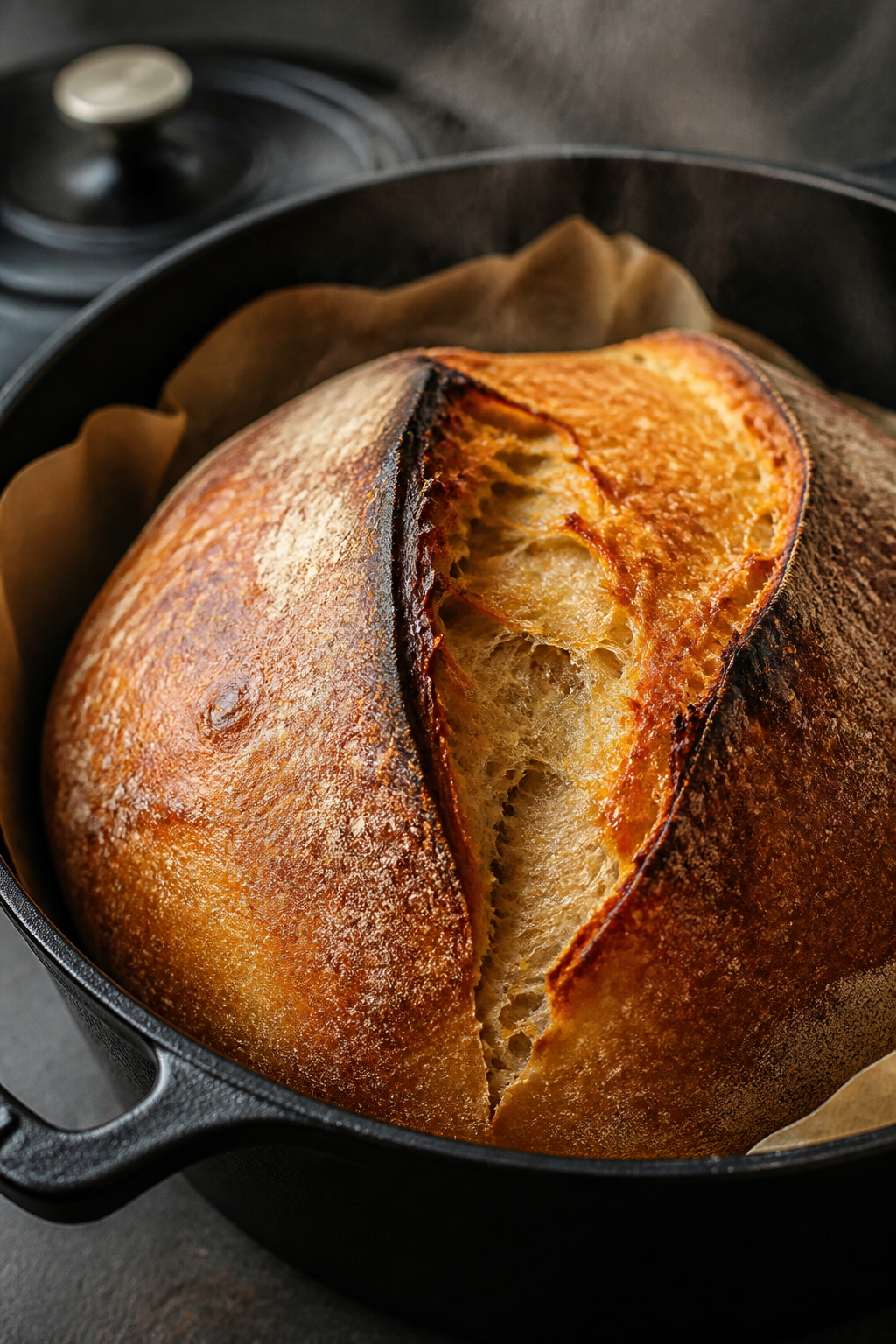
Transfer to the hot Dutch oven, cover, and bake 20 minutes. Remove lid, reduce to 450°F (232°C), and bake 20–25 minutes more until deep golden with blistered crust.
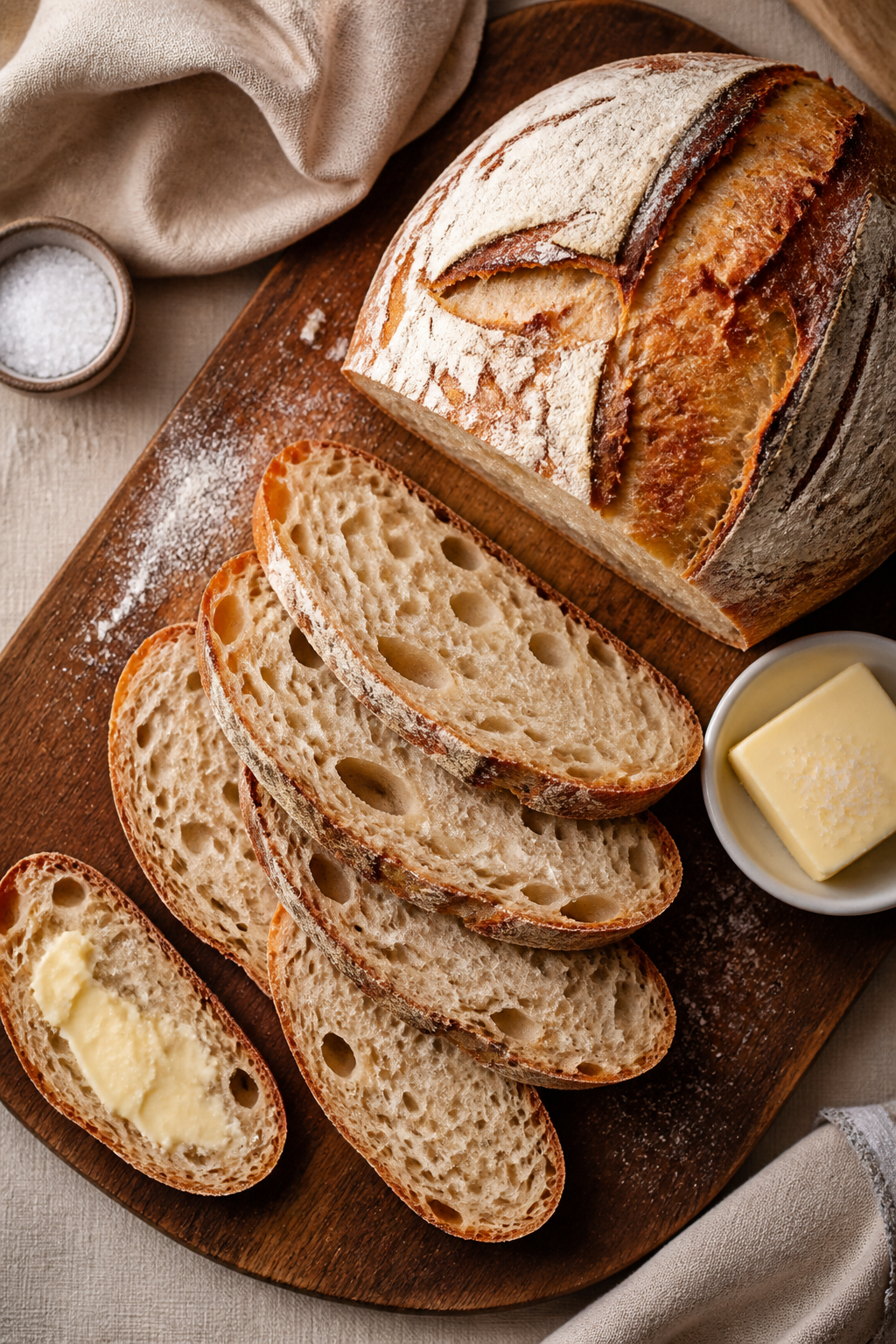
- Cool Completely: Wait at least 1 hour before slicing so the crumb sets. The crust will sing and crackle as it cools.
Keeping It Fresh
- Day 1–2: Store cut side down on a board or in a paper bag at room temp.
- Longer storage: Slice and freeze in a zip bag.
Toast straight from frozen.
- Avoid plastic on the counter: It softens the crust and encourages mold.
- Refresh the crust: Reheat at 350°F (175°C) for 8–10 minutes.
Health Benefits
- Better digestibility: Natural fermentation breaks down some gluten and starches.
- Lower glycemic impact: The acids in sourdough can slow sugar absorption.
- More bioavailable nutrients: Fermentation can reduce phytic acid, helping mineral absorption.
- Fewer additives: Just flour, water, salt, and starter.
What Not to Do
- Don’t use a weak starter: If it’s not doubling reliably, wait to bake.
- Don’t rush bulk fermentation: Time is a guide; watch for puffiness and bubbles.
- Don’t over-flour during shaping: Too much flour prevents dough from gripping and building tension.
- Don’t slice hot: You’ll squash the crumb and lose moisture.
- Don’t skip steam: Covered baking creates that shiny, crackly crust.
Alternatives
- Flour swaps: Use up to 30% whole wheat or rye for a heartier loaf. Add water as needed.
- No Dutch oven: Bake on a preheated stone or sheet. Add a pan of boiling water to the oven for steam.
- Same-day fast track: Proof at the warmer end of the range, bake in the evening.
- Seeds and mix-ins: Add 50–80 g toasted seeds during the last fold.
Hydrate seeds briefly to avoid drying the loaf.
FAQ
How do I know my starter is ready?
It should double in size after feeding, look bubbly and airy, and smell pleasantly tangy. A teaspoon should float in water, though the float test isn’t perfect—visual rise is more reliable.
Why is my dough so sticky?
High hydration doughs are naturally tacky. Lightly wet your hands instead of adding more flour.
If it’s soupy, you may have added too much water or underdeveloped the gluten; add an extra fold and give it time.
My loaf didn’t rise much in the oven. What happened?
Likely causes: underactive starter, under- or over-proofing, or a cool oven. Aim for a strong starter, proper bulk signs, and a fully preheated, steamy environment.
Can I use all-purpose flour?
Yes.
The crumb may be slightly softer and the dough a bit stickier. Hold back a tablespoon or two of water if needed.
How do I get bigger holes?
Use slightly higher hydration, gentle handling, full bulk fermentation, and a strong pre-shape and shape. Avoid degassing too aggressively.
Can I bake straight from the fridge?
Yes.
Score the cold dough and bake immediately in a preheated Dutch oven for maximum oven spring.
Final Thoughts
Great sourdough comes down to a lively starter, patient fermentation, and confident shaping. Follow the cues in this recipe, trust what you see and feel, and adjust as needed. With a few loaves under your belt, you’ll have a reliable rhythm and bread you’ll want to bake every week.
Enjoy the crackle, the aroma, and that first warm slice with butter.
Best Ever Easy Sourdough Bread Recipe (Step-by-Step) - Simple, Reliable, Delicious
Ingredients
Method
- Feed Your Starter (Morning): Make sure it’s active and bubbly. It should pass the float test or visibly dome in the jar. Plan to mix dough when the starter is at its peak.
- Mix the Dough (Autolyse Optional): In a bowl, combine 350 g water with 100 g active starter. Stir in 400 g bread flour and 50 g whole wheat flour until no dry bits remain. Rest 20–30 minutes to hydrate.
- Add Salt: Sprinkle in 9 g fine sea salt and the remaining 20–30 g water (as needed). Pinch and fold until the dough is cohesive. It should feel tacky but not soupy.
- Early Strength Building (First Hour): Perform 3 sets of stretch-and-folds every 20 minutes. With wet hands, lift one side of the dough and fold over itself, turning the bowl and repeating 4 times per set. The dough will smooth out and tighten.
- Bulk Fermentation: Cover and rest at 75–78°F (24–26°C) for 3–5 hours total from mixing, until the dough is puffy, jiggles when you shake the bowl, and has risen about 50%. Look for small bubbles along the sides.
- Pre-Shape: Lightly flour the counter. Gently turn the dough out, pat into a loose rectangle, and fold the edges toward the center. Flip seam-side down and use a bench scraper to tuck into a loose round. Rest 15–20 minutes.
- Final Shape: For a round loaf, flip the dough seam-side up, fold top to center, sides in, then roll down to create tension. Place seam-side up in a floured banneton (rice flour prevents sticking) or a towel-lined bowl.
- Proof: Option A: Room temp 45–75 minutes until slightly puffy. Option B: Cold proof in the fridge 8–16 hours for deeper flavor and easier scoring.
- Preheat the Oven: Place a Dutch oven with lid inside and preheat to 475°F (246°C) for at least 30 minutes. If baking on a stone or sheet, also add a steam tray.
- Score and Bake: Turn the dough onto parchment seam-side down. Score with a sharp lame or knife (a bold 1/2-inch slash works). Transfer to the hot Dutch oven, cover, and bake 20 minutes. Remove lid, reduce to 450°F (232°C), and bake 20–25 minutes more until deep golden with blistered crust.
- Cool Completely: Wait at least 1 hour before slicing so the crumb sets. The crust will sing and crackle as it cools.
Printable Recipe Card
Want just the essential recipe details without scrolling through the article? Get our printable recipe card with just the ingredients and instructions.