The Best Vanilla Layer Cake – Soft, Tender, and Full of Flavor
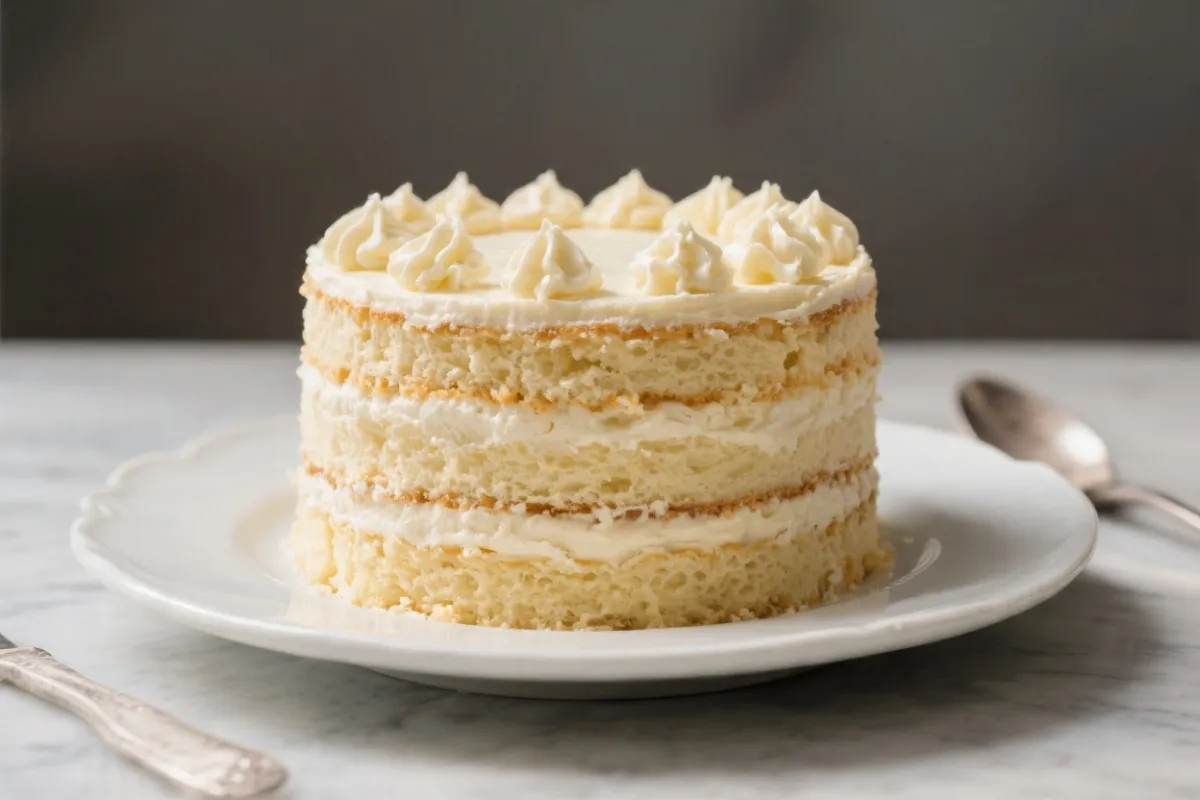
There’s something timeless about a classic vanilla layer cake. It’s the kind of cake that fits every occasion, from birthdays to backyard barbecues, and never fails to make people smile. This version is soft, tender, and packed with real vanilla flavor.
The crumb is moist but sturdy enough to stack and frost without stress. If you want a cake that tastes like it came from a bakery but feels easy enough to make at home, this is it.
What Makes This Recipe So Good
This cake is built for flavor and texture. Using both butter and oil gives you that rich, classic taste plus added moisture that lasts for days.
Cake flour keeps the crumb light and tender, and sour cream adds a subtle tang that balances the sweetness.
We don’t skimp on vanilla. There’s vanilla in the cake and the frosting, and a touch of almond extract adds warmth without overpowering. The batter mixes quickly, bakes evenly, and layers stack like a dream.
It’s reliable, flexible, and tastes like pure celebration.
Shopping List
- Cake flour (or all-purpose flour plus cornstarch; see FAQ)
- Granulated sugar
- Baking powder
- Fine sea salt
- Unsalted butter, room temperature
- Neutral oil (canola, vegetable, or light olive oil)
- Large eggs, room temperature
- Egg whites, room temperature
- Sour cream (or full-fat plain yogurt)
- Whole milk, room temperature
- Pure vanilla extract
- Almond extract (optional but recommended)
- For the frosting: Unsalted butter (soft), powdered sugar, heavy cream, vanilla extract, pinch of salt
- For assembly: Nonstick spray or butter, parchment rounds
How to Make It
- Prep your pans and oven. Heat the oven to 350°F (177°C). Grease two 8-inch round cake pans, line bottoms with parchment, then grease and lightly flour the parchment and sides.
- Whisk the dry ingredients. In a large bowl, whisk 2 1/2 cups cake flour, 2 1/2 teaspoons baking powder, and 1/2 teaspoon fine sea salt. Set aside.
- Cream the butter and sugar. In a stand mixer or with a hand mixer, beat 1/2 cup unsalted butter (softened) with 1 1/2 cups granulated sugar on medium-high until pale and fluffy, about 3 minutes.
Scrape the bowl.
- Add oil and extracts. Mix in 1/3 cup neutral oil, 1 tablespoon vanilla extract, and 1/4 teaspoon almond extract. Beat until smooth and glossy.
- Add eggs gradually. Beat in 2 whole eggs one at a time, then 2 additional egg whites, mixing well after each. Scrape the bowl again.
- Combine wet ingredients. In a small bowl, stir together 1/2 cup sour cream and 3/4 cup whole milk until smooth.
- Alternate dry and wet. On low speed, add the dry ingredients in three additions, alternating with the milk-sour cream mixture.
Start and end with dry. Mix just until combined. The batter should be silky and slightly thick.
Do not overmix.
- Portion and level. Divide batter evenly between the pans. Gently tap pans on the counter to release big air bubbles and smooth the tops with a spatula.
- Bake. Bake for 25–30 minutes, until the tops are set, edges pull slightly from the sides, and a toothpick comes out clean or with a few moist crumbs.
- Cool completely. Let cakes cool in pans 10 minutes, then turn out onto wire racks, peel off parchment, and cool fully. For easier assembly, wrap cooled layers and chill for 30–60 minutes.
- Make the frosting. Beat 1 1/2 cups unsalted butter (soft) until creamy.
Add 4–5 cups powdered sugar gradually, mixing on low, then medium, until fluffy. Beat in 2 teaspoons vanilla extract, a pinch of salt, and 3–5 tablespoons heavy cream until smooth and spreadable. Adjust sugar or cream for your preferred consistency.
- Level and stack. If needed, trim domed tops.
Place one layer on a cake stand. Spread a generous layer of frosting over the top.
- Add the second layer and crumb coat. Set the second layer on top. Spread a thin coat of frosting over the entire cake to trap crumbs.
Chill 15–20 minutes.
- Frost and finish. Apply the final layer of frosting, smoothing the sides and swooping the top. Add sprinkles, fresh berries, or keep it simple.
Keeping It Fresh
This cake stays moist for days. Keep it covered at cool room temperature for up to 2 days, or refrigerate for up to 5 days.
If chilled, let slices sit at room temperature for 20–30 minutes before serving so the butter in the cake and frosting softens.
To freeze, wrap unfrosted layers tightly in plastic and then foil. Freeze up to 2 months. Thaw in the fridge overnight, then bring to room temperature before frosting.
You can also freeze the fully frosted cake; chill until firm, wrap well, and thaw in the fridge.
Why This is Good for You
It’s dessert, but it’s also homemade. That means you control the ingredients and avoid unnecessary additives. Real butter and eggs give you satisfying richness, which helps a small slice feel indulgent enough. The balance of fat and sugar makes for a steady, memorable treat rather than a cloying sugar rush.
There’s also a little joy factor.
Baking from scratch can be grounding and creative. Sharing a cake you made yourself is good for the soul, and that counts for something too.
What Not to Do
- Don’t skip room temperature ingredients. Cold eggs and dairy can curdle the batter and reduce lift.
- Don’t overmix. Once the flour goes in, mix only until combined to keep the crumb tender.
- Don’t overbake. Dry cake comes from even a few extra minutes. Start checking at 24 minutes.
- Don’t use cheap artificial vanilla. The flavor matters here.
Use pure vanilla extract.
- Don’t frost warm cakes. Warm layers will melt the frosting and slide around.
Variations You Can Try
- Lemon-vanilla: Add 1 tablespoon lemon zest to the batter and 1–2 tablespoons lemon juice to the frosting.
- Berries and cream: Spread a thin layer of jam or fresh macerated berries between the layers before frosting.
- Funfetti: Fold 1/2 cup rainbow jimmies into the batter right before baking. Use jimmies, not nonpareils, to avoid color bleed.
- Coconut vanilla: Swap half the milk for canned coconut milk and press toasted coconut onto the frosted sides.
- Almond celebration cake: Increase almond extract to 1/2 teaspoon and top with sliced toasted almonds.
- Vanilla-chocolate swirl: Remove 1 cup of batter and mix in 2 tablespoons cocoa powder + 1 tablespoon milk. Swirl into pans before baking.
FAQ
Can I use all-purpose flour instead of cake flour?
Yes.
For each cup of cake flour, measure 1 cup all-purpose flour, remove 2 tablespoons, and replace with 2 tablespoons cornstarch. Sift well. This lightens the flour and keeps the crumb soft.
What if I only have 9-inch pans?
Use two 9-inch pans and bake for 20–25 minutes.
The layers will be slightly thinner. Start checking early and pull when a toothpick comes out clean or with moist crumbs.
Can I make cupcakes with this batter?
Absolutely. Line a 12-cup muffin tin and fill each about two-thirds full.
Bake at 350°F (177°C) for 17–20 minutes. You should get about 24 cupcakes.
How do I get perfectly flat layers?
Use bake-even strips or wrap the pans with damp towel strips. You can also lower the oven to 335°F and extend the bake time slightly for gentler rise.
Trimming domes with a serrated knife works too.
What’s the best way to measure flour?
For accuracy, use a scale. If using cups, fluff the flour, spoon it into the cup, and level it off with a knife. Scooping directly compacts the flour and leads to dense cake.
Can I reduce the sugar?
You can cut the sugar in the cake by about 10% without major changes, but the texture and moisture will shift if you reduce more.
For the frosting, adjust to taste and balance with a pinch of salt and extra vanilla.
What frosting works besides vanilla buttercream?
Swiss meringue buttercream is silky and less sweet. Cream cheese frosting adds tang but is softer for stacking, so chill between layers. Chocolate ganache also pairs beautifully with vanilla.
Do I need a stand mixer?
No.
A hand mixer works great. Just be sure to cream the butter and sugar until fluffy and avoid overmixing once the flour is added.
Why add both butter and oil?
Butter brings rich flavor. Oil keeps the cake moist even after chilling.
Together, they give you the best of both worlds: taste and texture.
How far in advance can I make it?
Bake the layers up to two days ahead, wrap well, and refrigerate. Frost the day you plan to serve if you can. A fully frosted cake also holds well overnight in the fridge.
Final Thoughts
A great vanilla layer cake is all about balance: tender crumb, bold vanilla, and a frosting that complements rather than overwhelms.
This recipe checks all those boxes and leaves room for your personal touch. Whether you keep it classic or add a fun twist, you’ll end up with a cake that celebrates the simple things done well. Light some candles, slice generously, and enjoy every bite.
Ingredients
Method
- Prep your pans and oven. Heat the oven to 350°F (177°C). Grease two 8-inch round cake pans, line bottoms with parchment, then grease and lightly flour the parchment and sides.
- Whisk the dry ingredients. In a large bowl, whisk 2 1/2 cups cake flour, 2 1/2 teaspoons baking powder, and 1/2 teaspoon fine sea salt. Set aside.
- Cream the butter and sugar. In a stand mixer or with a hand mixer, beat 1/2 cup unsalted butter (softened) with 1 1/2 cups granulated sugar on medium-high until pale and fluffy, about 3 minutes. Scrape the bowl.
- Add oil and extracts. Mix in 1/3 cup neutral oil, 1 tablespoon vanilla extract, and 1/4 teaspoon almond extract. Beat until smooth and glossy.
- Add eggs gradually. Beat in 2 whole eggs one at a time, then 2 additional egg whites, mixing well after each. Scrape the bowl again.
- Combine wet ingredients. In a small bowl, stir together 1/2 cup sour cream and 3/4 cup whole milk until smooth.
- Alternate dry and wet. On low speed, add the dry ingredients in three additions, alternating with the milk-sour cream mixture. Start and end with dry. Mix just until combined. The batter should be silky and slightly thick. Do not overmix.
- Portion and level. Divide batter evenly between the pans. Gently tap pans on the counter to release big air bubbles and smooth the tops with a spatula.
- Bake. Bake for 25–30 minutes, until the tops are set, edges pull slightly from the sides, and a toothpick comes out clean or with a few moist crumbs.
- Cool completely. Let cakes cool in pans 10 minutes, then turn out onto wire racks, peel off parchment, and cool fully. For easier assembly, wrap cooled layers and chill for 30–60 minutes.
- Make the frosting. Beat 1 1/2 cups unsalted butter (soft) until creamy. Add 4–5 cups powdered sugar gradually, mixing on low, then medium, until fluffy. Beat in 2 teaspoons vanilla extract, a pinch of salt, and 3–5 tablespoons heavy cream until smooth and spreadable. Adjust sugar or cream for your preferred consistency.
- Level and stack. If needed, trim domed tops. Place one layer on a cake stand. Spread a generous layer of frosting over the top.
- Add the second layer and crumb coat. Set the second layer on top. Spread a thin coat of frosting over the entire cake to trap crumbs. Chill 15–20 minutes.
- Frost and finish. Apply the final layer of frosting, smoothing the sides and swooping the top. Add sprinkles, fresh berries, or keep it simple.
Printable Recipe Card
Want just the essential recipe details without scrolling through the article? Get our printable recipe card with just the ingredients and instructions.