Chocolate Cake – A Moist, Classic Treat for Any Occasion
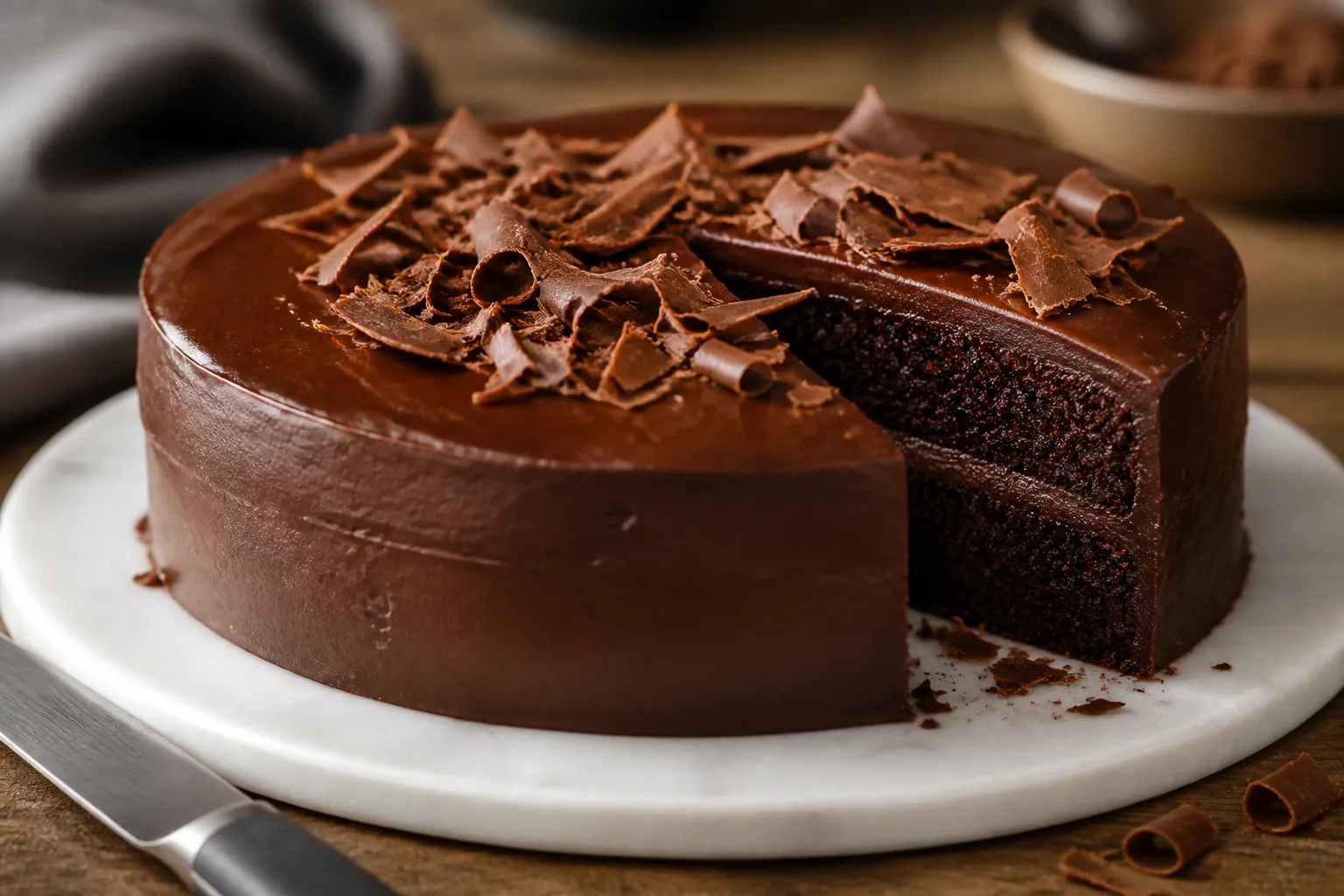
Chocolate cake has a way of making any day feel special. It’s familiar, rich, and comforting without trying too hard. This version is simple enough for a weeknight yet polished enough for birthdays and celebrations.
You don’t need fancy tools or rare ingredients—just a few pantry staples and a good whisk. Follow along, and you’ll get a soft, chocolatey crumb and a silky frosting that tastes like a hug.
Why This Recipe Works
This cake balances cocoa with a touch of coffee to deepen the chocolate flavor without making it taste like coffee. Using oil instead of butter keeps the crumb extra moist, even after a day or two.
A mix of white sugar and brown sugar adds both sweetness and a hint of caramel depth. Finally, buttermilk (or a quick homemade substitute) ensures a tender, soft texture that slices cleanly.
What You’ll Need
- Dry Ingredients: 1¾ cups all-purpose flour, ¾ cup unsweetened cocoa powder, 1½ teaspoons baking powder, 1½ teaspoons baking soda, 1 teaspoon fine salt, 1 cup granulated sugar, ½ cup packed brown sugar
- Wet Ingredients: 2 large eggs, 1 cup buttermilk (or 1 cup milk + 1 tablespoon vinegar/lemon juice), ½ cup neutral oil (canola or vegetable), 2 teaspoons vanilla extract, ¾ cup hot coffee (or hot water)
- For the Frosting: 1 cup unsalted butter, softened; 2¾–3 cups powdered sugar; ½ cup unsweetened cocoa powder; ½ teaspoon salt; 2 teaspoons vanilla extract; 3–4 tablespoons milk or cream
- Equipment: Two 8-inch round cake pans (or one 9×13-inch pan), mixing bowls, whisk, spatula, parchment paper
How to Make It
- Prep the pans: Heat the oven to 350°F (175°C). Grease pans and line bottoms with parchment.
This makes release foolproof.
- Whisk dry ingredients: In a large bowl, whisk flour, cocoa, baking powder, baking soda, salt, granulated sugar, and brown sugar until even in color and lump-free.
- Combine wet ingredients (except coffee): In another bowl, whisk eggs, buttermilk, oil, and vanilla until smooth.
- Bring it together: Pour wet into dry. Stir gently until almost combined. Add the hot coffee and whisk just until the batter is smooth and glossy.
The batter will be thin—that’s right.
- Bake: Divide into pans and bake 28–32 minutes for rounds (or 32–36 minutes for a 9×13) until a toothpick comes out with a few moist crumbs.
- Cool completely: Let cakes rest 10 minutes in pans, then turn onto racks to cool fully before frosting.
- Make the frosting: Beat butter until fluffy. Sift in cocoa and powdered sugar with salt, then add vanilla and milk, a little at a time, until creamy and spreadable.
- Frost and finish: Level cake tops if needed. Spread frosting between layers, then over the top and sides.
Chill 15 minutes for cleaner slices.
Keeping It Fresh
Store the frosted cake covered at room temperature for up to 2 days. For longer storage, keep it in the fridge, well covered, for up to 5 days. Let chilled slices sit out 20–30 minutes before serving so the crumb softens and the frosting turns silky again.
To freeze, wrap unfrosted layers tightly and freeze for up to 2 months; thaw in the fridge overnight before frosting.
Health Benefits
Cocoa provides flavonoids, which have antioxidant properties. Using oil keeps the cake moist without relying on heavy amounts of butter. You can also reduce overall sugar slightly or use darker cocoa to get a deeper taste with less sweetness.
Portion control matters—small slices still satisfy that chocolate craving.
Pitfalls to Watch Out For
- Overmixing: Tough cake comes from overworking the batter. Stop as soon as everything is just combined.
- Skipping the parchment: This cake is tender; parchment prevents sticking and tearing.
- Cold ingredients: Room-temperature eggs and buttermilk blend better and rise more evenly.
- Overbaking: Pull the cake when a toothpick has moist crumbs, not when it’s bone dry.
- Frosting too thick: Add milk a teaspoon at a time until it spreads easily.
Alternatives
- Dairy-free: Use almond milk with 1 tablespoon vinegar in place of buttermilk, and a dairy-free butter for the frosting.
- Gluten-free: Substitute a 1:1 gluten-free baking flour blend; let the batter rest 10 minutes before baking.
- Richer taste: Swap half the oil for melted butter for a slightly denser crumb and buttery note.
- No coffee: Use hot water or hot milk; you’ll still get a great rise and shine on the cocoa.
- Sheet cake: Bake in a 9×13 pan for a simple, transport-friendly option.
FAQ
Can I make this cake ahead?
Yes. Bake layers a day in advance, wrap tightly, and keep at room temperature.
Frost the day you plan to serve for the best texture.
What cocoa powder works best?
Unsweetened natural cocoa works great. Dutch-process gives a darker color and smoother flavor; both are fine since this recipe uses baking soda and powder together.
How do I get a flat top?
Use bake-even strips or lower the oven rack to the middle and avoid overfilling pans. You can also lightly press a clean towel over the dome right after baking, then level once cool.
Can I halve or double the recipe?
Yes.
Halve for one 8-inch round or an 8-inch square. Double for a tall layer cake; watch bake times and use multiple pans to avoid underbaked centers.
Why is my cake dry?
It’s usually from overbaking or measuring flour too heavily. Spoon and level your flour, and check for doneness a few minutes early.
In Conclusion
This chocolate cake is straightforward, deeply chocolatey, and consistently moist.
With simple ingredients and a reliable method, it’s the kind of recipe you’ll return to for birthdays, potlucks, or a cozy weekend treat. Keep the steps light, don’t overmix, and enjoy every slice.