
Chilli Con Carne — The Easiest Ever Recipe You Will Make Again and Again
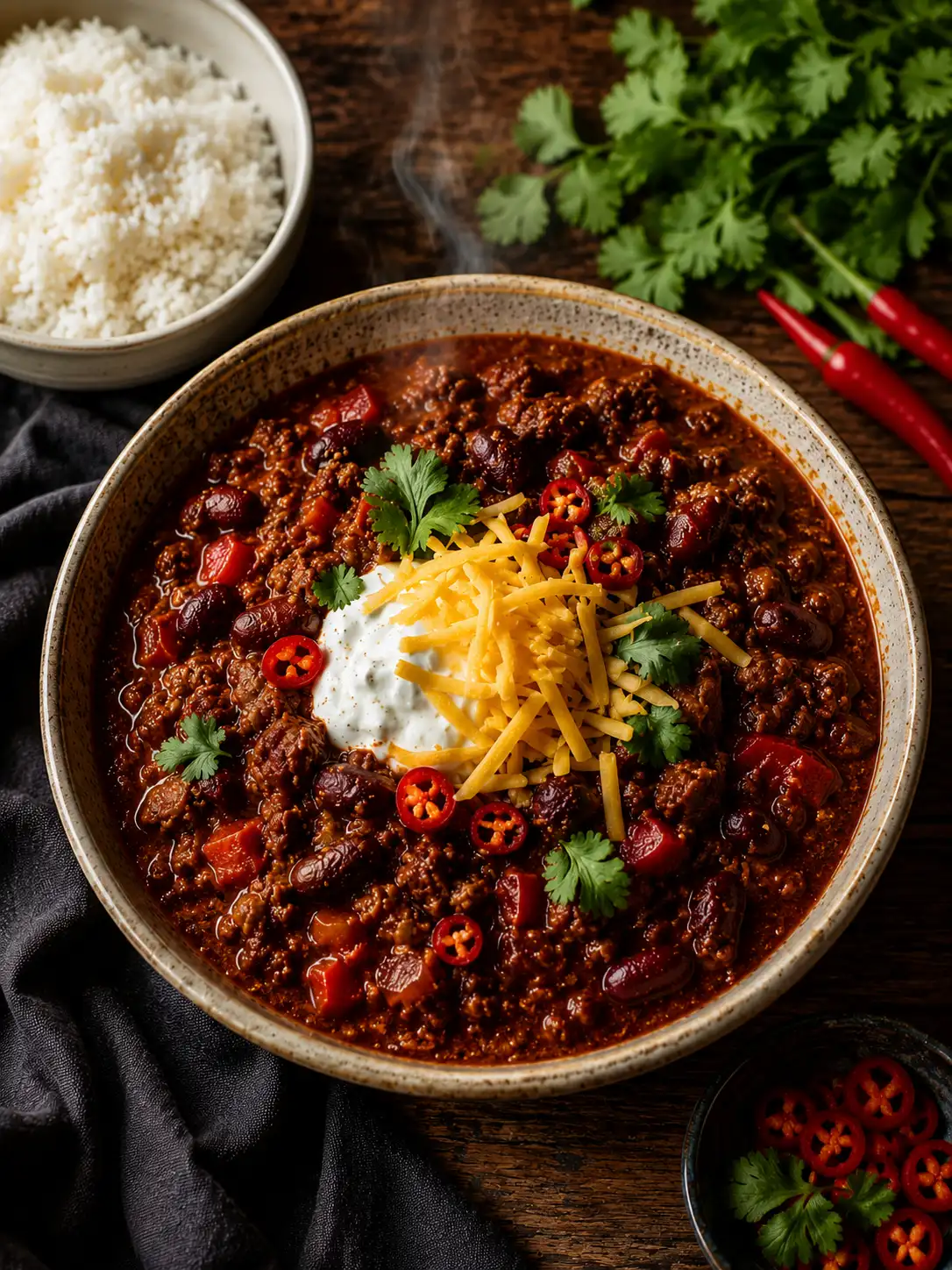
There are some dishes that feel like a warm hug the moment they hit the table. Chilli Con Carne is exactly that kind of meal. Rich, deeply spiced, packed with tender beef and hearty kidney beans, it is the sort of recipe that fills your kitchen with an aroma so good that everyone wanders in asking what is cooking before it is even ready.
I have been cooking this dish for over two decades — for family dinners, for batch cooking sessions on Sunday afternoons, for gatherings where I needed something that could easily stretch to feed a crowd. And every time, it disappears fast. This version is built for real life: no packet mixes, no complicated techniques, no obscure ingredients. Just proper home cooking that delivers serious flavour.
There is also one ingredient in here that surprises people every single time. I will tell you about it shortly — and once you try it, you will never make chilli without it again.

Easy Tres Leches Cake With Cake Mix (Moist, Creamy & Foolproof) – A Simple, Crowd-Pleasing Dessert
What Exactly Is Chilli Con Carne?
Before we get into the kitchen, a little context. Chilli Con Carne — or simply “chili” if you are in the United States — is not actually Mexican food, despite often appearing on Mexican restaurant menus. It sits firmly in the Tex-Mex tradition, meaning it was born in Texas with heavy influence from Mexican cooking culture.
The name itself translates directly as “chilli with meat” — con carne being the Spanish for “with meat.” The dish has been cooked in Texas since the 1800s, and different regions and cooks have strong opinions about the correct way to make it. Some purists insist it should never contain beans. Others would never leave them out. This version uses red kidney beans because they add body, fibre, and that classic hearty texture that makes the dish so satisfying.
Why This Recipe Works So Well
Most home cooks have made chilli at some point, usually with a spice packet from the supermarket. The packet works fine, but it always tastes like a packet. The difference with making your own spice blend from scratch is enormous — you control the heat level, the depth, the balance between smoky and savoury. And the method matters just as much as the ingredients.
Browning the mince properly is the single most important step. Not just cooking it through — actually browning it until it starts to turn golden in places. That colour is the Maillard reaction doing its work, creating hundreds of flavour compounds that simply cannot develop any other way. Rushing this step means a flat-tasting chilli no matter how many spices you add.
Blooming the spices in the pan with the onion and garlic before adding any liquid is the second critical step. Dry-toasting spices in a hot pan — even for just a few minutes — releases their essential oils and transforms their flavour. Ground cumin that has been toasted tastes completely different to cumin that has just been dissolved into a wet sauce.
These two steps alone will change the way your chilli tastes. Everything else builds on top of them.
The Secret Ingredient That Changes Everything
Dark chocolate.
I know. It sounds strange. It sounds like something a chef on a television show would add to seem clever. But I promise you, a small square of good-quality dark chocolate — at least 70% cocoa solids — stirred into the chilli right at the end completely transforms the dish.
What it does is subtle but profound. The bitterness of the chocolate counterbalances the acidity of the tomatoes. The richness deepens the overall flavour in a way that is hard to describe but immediately noticeable. And the slight earthiness it adds rounds everything out, giving the chilli a complexity that makes people take a second bite and try to figure out what that flavour is.
The key rules: it must be very dark chocolate, minimum 70% cocoa content. Milk chocolate or anything sweet will make the chilli taste wrong — too confectionery, too rich in the wrong direction. And you only need a small amount — about 25 grams, roughly one square from a good bar. Add it off the heat right at the end and stir until it melts completely into the sauce.
If you do not have dark chocolate, simply leave it out. The chilli will still be excellent. But try it with the chocolate at least once, and you will understand why it earns its place.
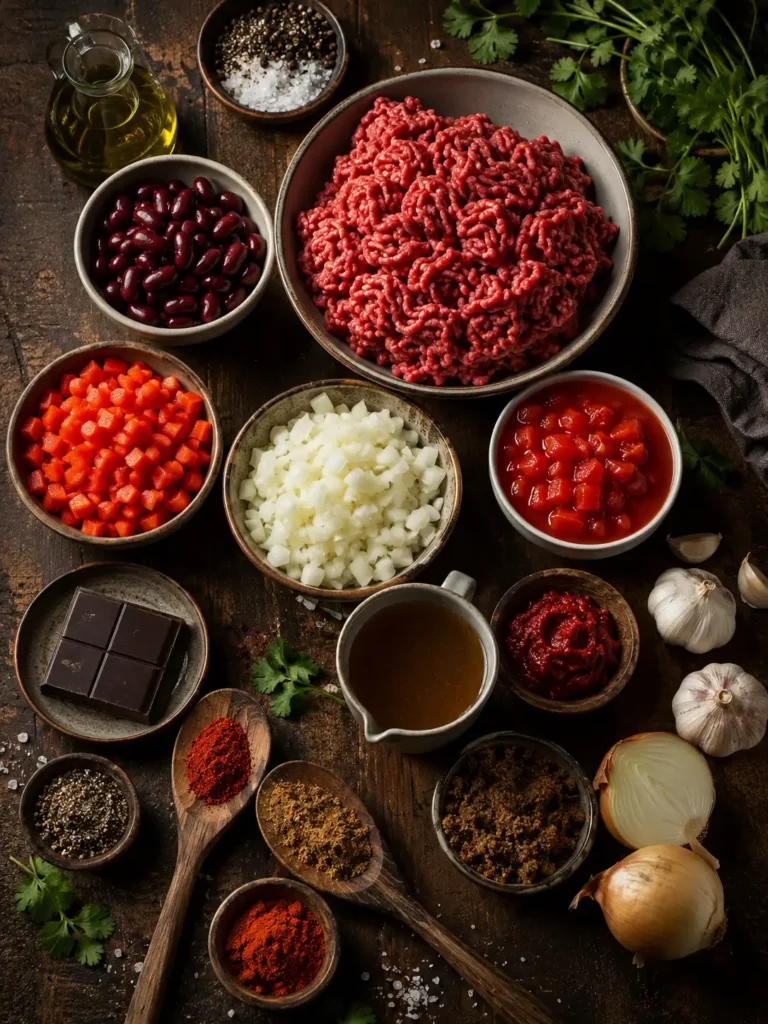
Ingredients and What Each One Does
Beef mince (ground beef) — The base of the dish. Use 10% fat mince for the best balance of flavour and texture. Lower-fat mince (5%) can work but sometimes turns slightly grainy during the long simmer. Higher-fat mince (20%) is perfectly fine and often cheaper — just drain away any excess fat after browning so the final dish is not greasy.
Onion and garlic — The aromatic backbone. Fresh is always best, but frozen chopped onion is a completely legitimate shortcut on a busy weeknight. For garlic, fresh cloves give the best flavour — three cloves minimum.
Mild chilli powder — This is your primary heat control. Start with the recipe amount and taste at the end. You can always add more at the finish if you want more fire. Different brands vary quite a bit in heat level, so know your spice.
Sweet smoked paprika — Adds a beautiful smoky depth that mild chilli powder alone cannot provide. Do not skip this. The combination of chilli powder and smoked paprika together creates a far more interesting flavour than either one alone.
Ground cumin — Earthy, warm, and essential to Tex-Mex flavour. If you only have whole cumin seeds, toast them briefly in the dry pan before adding oil, then let them bloom before continuing. It is worth the extra two minutes.
Dark brown sugar — Sounds unusual but genuinely works. A small amount adds a slight caramel sweetness that balances the natural acidity of the tomatoes and spices without making the dish taste sweet. It also helps the sauce develop a richer colour.
Chopped tomatoes — The liquid base of the sauce. Use the best quality you can find. A good tin of chopped tomatoes with a deep red colour will produce a richer sauce than a pale, watery tin.
Tomato purée (tomato paste) — Concentrated tomato flavour. It thickens the sauce slightly and adds an intensity that canned tomatoes alone do not have.
Red kidney beans — Drained and rinsed thoroughly before adding. Rinsing removes the starchy, salty liquid from the tin and helps the beans absorb the flavours of the sauce during simmering.
Red peppers — Cut into generous chunks so they hold their shape during the long simmer but become completely tender and slightly sweet. They add colour, texture, and natural sweetness to balance the spice.
Hot beef stock — Adds depth and keeps the sauce from becoming too thick too quickly. Made from a good stock cube is completely fine here.
Dark chocolate — Already covered above. Your secret weapon.
How to Make It — Step by Step
Step 1: Brown the mince
Heat the oil in a large, deep, heavy-bottomed pan over a medium-high heat. Add the beef mince and leave it mostly undisturbed for the first couple of minutes. Resist the urge to stir constantly — constant stirring steams the meat rather than browning it. Break it up with a wooden spoon, but let it sit in contact with the hot pan long enough to develop real colour. You want patches of deep golden-brown on the meat, not just grey colouring throughout. This should take 8–10 minutes done properly.
Step 2: Add the aromatics and spices
Reduce the heat to medium-low. Add the chopped onion, crushed garlic, chilli powder, smoked paprika, ground cumin, dark brown sugar, and a generous pinch of salt and black pepper. Stir everything together so the spices coat the meat and onion evenly. Now let this cook for a full 10 minutes, stirring regularly. You will smell the spices blooming — that toasty, warm, deep fragrance is exactly what you want. If the mixture starts to catch on the bottom of the pan, add a splash of water or reduce the heat slightly.
Step 3: Build the sauce
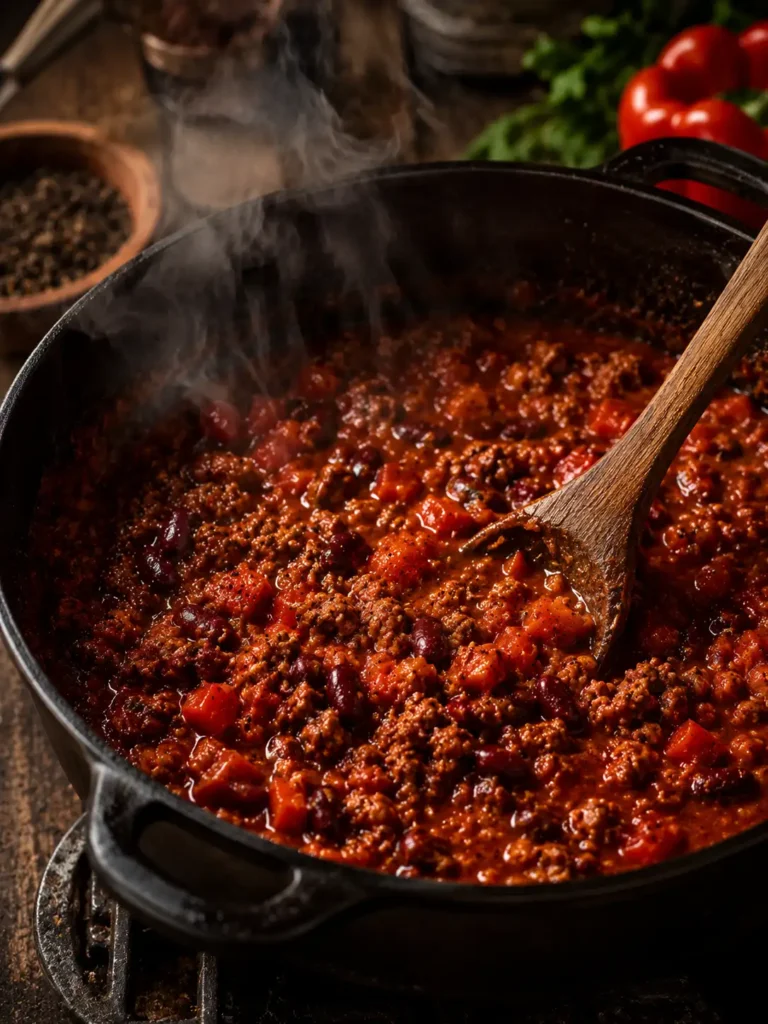
Add the chopped tomatoes, tomato purée, drained kidney beans, red pepper chunks, and hot beef stock. Stir everything together thoroughly, scraping up any flavourful bits from the bottom of the pan. Bring to a gentle simmer, then put a lid on the pan, slightly ajar to allow some steam to escape.
Step 4: Simmer slowly
Let the chilli simmer gently for 45 minutes, stirring occasionally. The sauce will reduce and thicken, the beans will absorb the spice flavours, and the peppers will become silky and tender. Do not rush this stage — the long, slow simmer is what transforms the individual ingredients into something that tastes like it has been cooking all day.
Step 5: The chocolate finish
Remove the pan from the heat completely. Add the dark chocolate and stir continuously until it has fully melted into the sauce. Taste and adjust the seasoning — more salt, more chilli powder if you want more heat, a small squeeze of lime juice if you want brightness.
The chilli is ready. If you can bear to wait 10 minutes before serving, it will taste even better as it settles.
Getting the Heat Level Right
This recipe as written produces a mild-to-medium heat that most adults and older children will find comfortable. Here is how to adjust it for your household:
For mild heat (family friendly, young children): Use 1 teaspoon of chilli powder instead of 2, and make sure your smoked paprika is the sweet variety rather than hot.
For medium heat (the default recipe): Follow the recipe exactly with 2 teaspoons mild chilli powder and taste at the end, adding more if needed.
For hot chilli: Use 2 teaspoons of hot chilli powder instead of mild, and add a finely chopped fresh red chilli with the onion in step 2. A pinch of cayenne pepper at the end also works well for boosting heat without affecting the other flavours.
The golden rule: Always adjust heat at the end after tasting, not at the beginning. Spice levels concentrate as the sauce reduces, and it is much easier to add heat than to take it away.
What to Serve With Chilli Con Carne
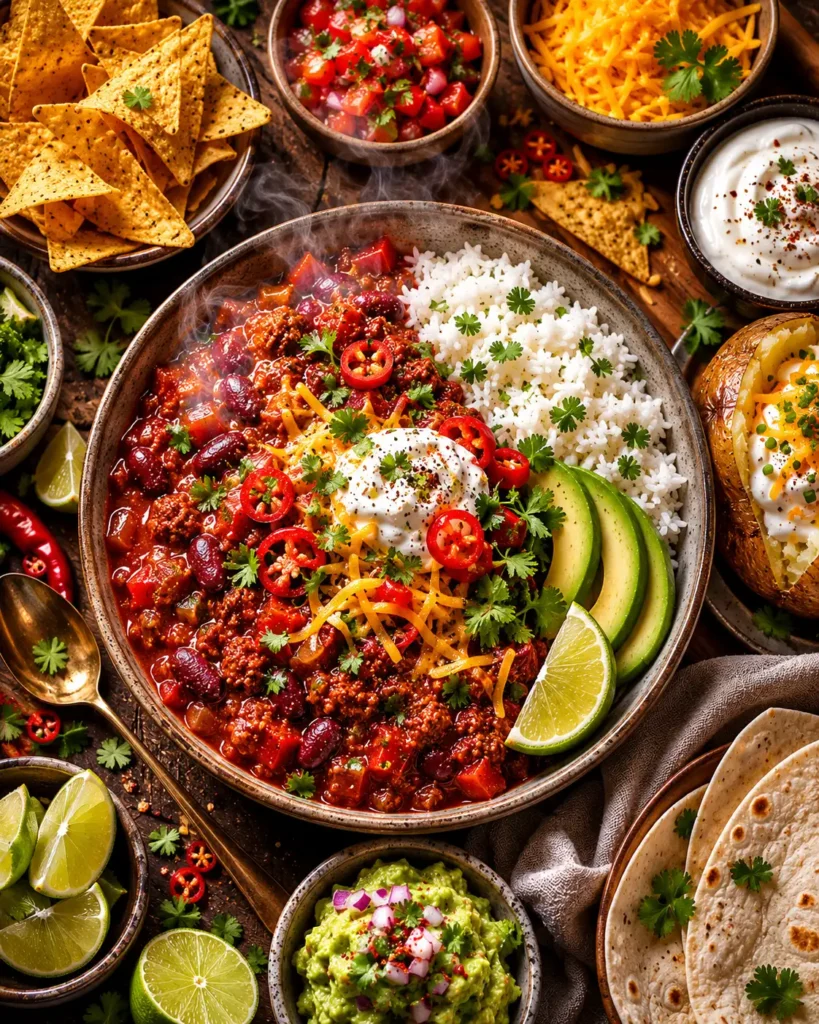
The classic serving is over plain white or basmati rice — simple, satisfying, and the perfect vehicle for the rich sauce. But there are so many other excellent ways to serve it:
Over jacket potatoes is one of the best — a fluffy baked potato split open and loaded with chilli, a spoonful of soured cream, and a handful of grated mature cheddar on top. This turns a midweek dinner into something genuinely special.
In tacos or burritos, where the chilli becomes a filling alongside avocado, shredded lettuce, and a sharp salsa. Pile it in, fold it up, and eat it immediately while everything is still warm.
Over tortilla chips as a loaded nacho situation — spread chips across a baking sheet, spoon chilli over the top, scatter with grated cheese, and put under the grill for a few minutes until everything is melted and bubbling.
Stuffed into peppers for a more elegant presentation. Halve large peppers, remove the seeds, spoon in the chilli, top with cheese, and bake at 180°C for 20–25 minutes.
As a chilli dog topping — this is an underrated option that works brilliantly for feeding a crowd informally.
Toppings that always work: soured cream to cool the heat, grated mature cheddar or Monterey Jack, sliced fresh chillies for extra fire, chopped coriander (cilantro), diced avocado or a spoonful of guacamole, a wedge of lime, finely sliced spring onions.
Batch Cooking and Freezing
This recipe is a batch cooking hero. It doubles and triples beautifully — just scale the ingredients up and use a larger pot. The flavour actually improves after a day in the refrigerator as everything continues to meld together, which makes it a perfect make-ahead meal for the week.
Refrigerator storage: Cool completely, then transfer to an airtight container. Keeps well for up to 3 days. Reheat thoroughly on the hob with a splash of water or stock to loosen the sauce, or in the microwave until piping hot throughout.
Freezer storage: Portion into freezer-safe containers or bags once fully cooled. Label with the date. Freezes for up to 3 months with no quality loss. Defrost overnight in the refrigerator before reheating, or defrost from frozen in the microwave using the defrost setting before heating through fully.
This is the kind of recipe worth making a large batch of on a quiet Sunday afternoon. Portion it up, freeze it, and you have a brilliant ready-to-go dinner waiting for the busiest evenings of the week.
Common Mistakes and How to Avoid Them
Not browning the mince properly is the most common error. If you crowd the pan with too much meat, the temperature drops and the mince steams in its own juices rather than browning. If you have a large quantity of mince, brown it in two batches rather than all at once.
Adding the spices too late means they never properly bloom and integrate. The spices need those 10 minutes with the onion and meat before liquid is added to develop their full flavour potential.
Simmering at too high a heat will cause the bottom of the pot to catch and burn, and the sauce to reduce too quickly before the flavours have had time to develop. A gentle simmer — just the occasional lazy bubble — is what you want for the full 45 minutes.
Using the wrong chocolate will ruin the finish. Milk chocolate is too sweet and will make the chilli taste confusing. Dark chocolate at 70% cocoa or above is non-negotiable for this technique to work as intended.
Under-seasoning is extremely common in chilli. Taste it properly at the end and season generously with salt and black pepper. A well-seasoned chilli tastes completely different from an under-seasoned one.
Making It Vegetarian
Replace the beef mince with Quorn mince or plant-based beef mince and use vegetable stock instead of beef stock. The cooking process stays exactly the same — brown the vegetarian mince, bloom the spices, simmer the sauce. The texture is slightly different but the flavour profile remains excellent.
Alternatively, a three-bean chilli works beautifully as a completely different but equally satisfying dish — use a mix of kidney beans, black beans, and pinto beans, and add a diced sweet potato with the tomatoes for extra body and natural sweetness.
Frequently Asked Questions
Can I make this in a slow cooker? Yes. Brown the mince and bloom the spices on the hob first as described — do not skip this step even for slow cooker chilli, because the Maillard reaction and spice blooming cannot happen in a slow cooker environment. Transfer everything into the slow cooker, add all remaining ingredients, and cook on low for 6–8 hours or high for 3–4 hours. Add the chocolate in the last 15 minutes.
My chilli is too thin. How do I thicken it? Remove the lid for the last 15–20 minutes of simmering to allow more liquid to evaporate. Alternatively, mash a small portion of the kidney beans against the side of the pot and stir them through — this releases their starch into the sauce and thickens it naturally without any additional ingredients.
My chilli is too thick. How do I fix it? Simply add a splash of hot beef stock or water, stir through, and continue simmering for a few minutes.
Can I use fresh tomatoes instead of tinned? You can, but you will need a significant quantity — around 800g of ripe fresh tomatoes, blanched, peeled, and roughly chopped. Tinned tomatoes are actually often better for this dish because they are picked at peak ripeness and their flavour is consistent regardless of season.
Why does my chilli taste flat even though I followed the recipe? Almost always the answer is seasoning. Taste it and add more salt, then taste again. A chilli that seems flavourless often just needs salt to bring everything forward. If the seasoning is correct and it still tastes flat, a small squeeze of lime juice or a splash of red wine vinegar will brighten all the flavours immediately.
Can I add beer to chilli? Absolutely, and it is excellent. Replace about half the beef stock with a dark beer — a stout or a porter works particularly well. The malt and bitter notes from the beer complement the spices and add another layer of depth to the sauce.
Nutrition at a Glance
Per serving (based on 6 servings from this recipe):
Calories: approximately 445 | Protein: 42g | Carbohydrates: 47g | Fat: 11g | Fibre: 14g
The high protein and fibre content makes this a genuinely nutritious meal despite feeling indulgent. The kidney beans contribute a significant portion of both the protein and fibre, which is one of many good reasons not to leave them out.
Final Thoughts
A great Chilli Con Carne is one of those fundamental recipes that every cook should have in their repertoire — the kind of dish you can make with your eyes closed eventually, that scales effortlessly for any size gathering, and that tastes even better the next day.
The version you have here is straightforward, honest, and genuinely delicious. No shortcuts that compromise flavour. No obscure techniques. Just the right ingredients treated the right way, with that one small but significant secret at the end.
Make it once and it will earn a permanent place in your regular dinner rotation.
Calorie and nutrition information is approximate and calculated per serving based on standard ingredient quantities. Values may vary depending on specific brands used.