Vanilla Buttercream Frosting – Smooth, Fluffy, and Foolproof
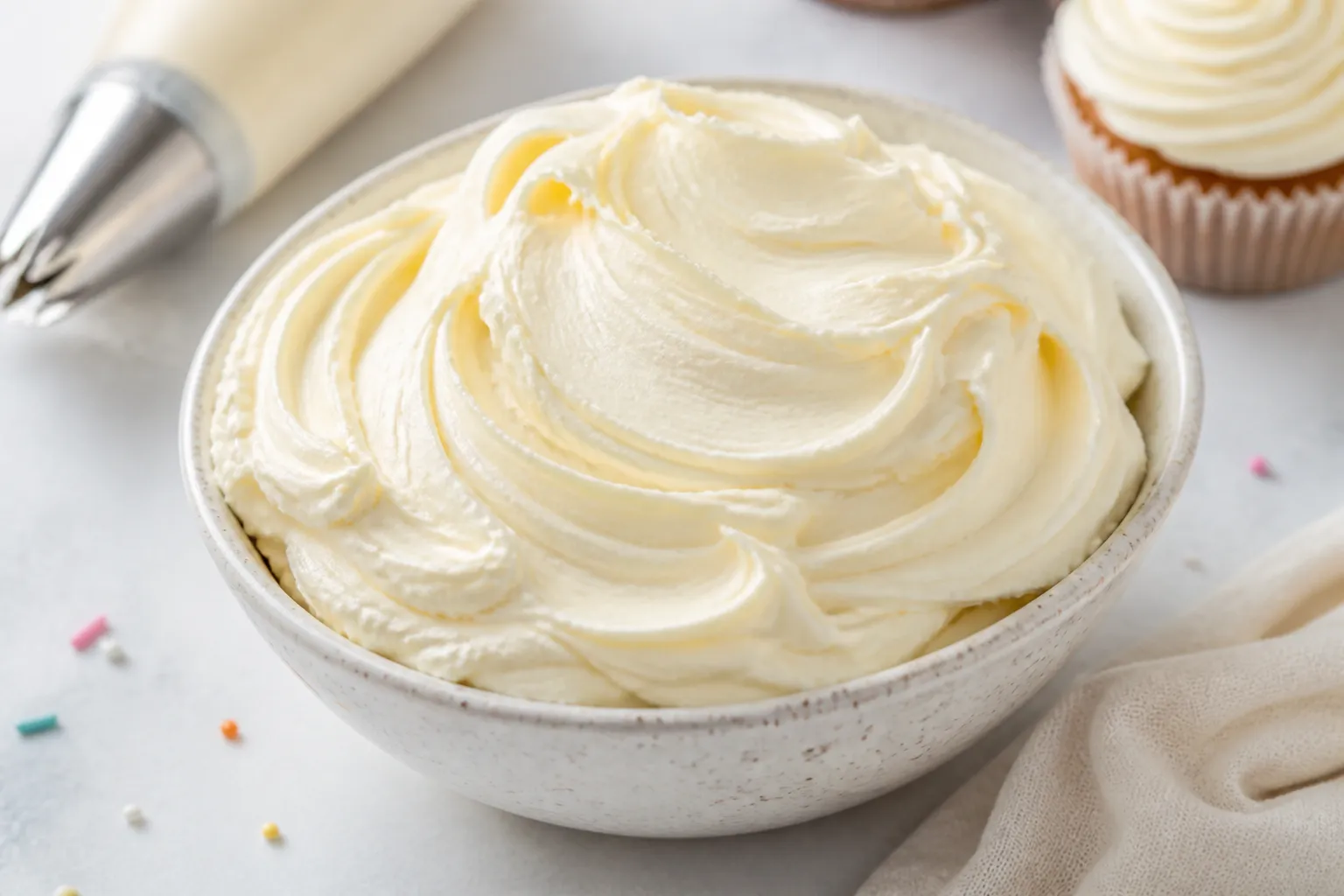
Vanilla buttercream is the dependable best friend of homemade cakes and cupcakes. It’s creamy, lightly sweet, and comes together in minutes with pantry staples. Whether you’re frosting a birthday cake or piping swirls on cupcakes, this version is stable, silky, and easy to adjust.
You’ll get a bakery-style finish without complicated techniques. Plus, it takes flavor and color beautifully, so you can make it your own.
Why This Recipe Works
This buttercream balances sweetness with real vanilla flavor and a pinch of salt for depth. Beating softened butter first creates a strong, fluffy base that holds its shape well.
Powdered sugar adds structure without graininess, and a splash of milk or cream brings it to that cloud-light texture. The method is simple but precise, so you get consistent, smooth results every time.
Shopping List
- Unsalted butter (1 cup/2 sticks), room temperature
- Powdered sugar (3.5–4 cups), sifted if lumpy
- Vanilla extract (2–3 teaspoons), or vanilla bean paste
- Milk or heavy cream (2–4 tablespoons)
- Fine salt (a pinch to 1/8 teaspoon)
- Optional: Almond extract (1/4 teaspoon), food coloring, lemon juice (1–2 teaspoons to cut sweetness)
Instructions
- Soften the butter: It should be slightly cool to the touch but easily dented. If it’s shiny or oily, it’s too warm.
- Beat the butter: Using a stand mixer with the paddle or a hand mixer, beat butter on medium-high for 2–3 minutes until pale and fluffy.
- Add half the sugar: Reduce speed to low and slowly add about half the powdered sugar.
Mix until mostly incorporated, then increase to medium and beat for 1 minute.
- Flavor it: Add vanilla and salt. If using, add a tiny splash of almond extract. Beat 30 seconds.
- Add remaining sugar: With mixer on low, add the rest of the powdered sugar.
Scrape the bowl and paddle.
- Adjust texture: Add 1 tablespoon milk or cream at a time, beating on medium, until the frosting is smooth and spreadable. For piping, keep it slightly thicker; for spreading, a little looser is fine.
- Whip for fluff: Increase to medium-high and beat 1–2 minutes for an airy finish. Avoid overbeating, which can trap too much air and create bubbles.
- Taste and tweak: Add a pinch more salt if too sweet, a touch more vanilla if needed, or 1 teaspoon lemon juice for brightness.
Mix just to combine.
- Color or customize: If tinting, add gel color a drop at a time. Stir by hand at the end to press out large air pockets for ultra-smooth frosting.
- Use or store: Frost your cooled cake or cupcakes immediately, or follow storage tips below.
Storage Instructions
Room temperature: Up to 2 days in a cool room, covered. Avoid heat or direct sun. Refrigerator: Store in an airtight container up to 1 week.
Bring to room temp and re-whip briefly before using. Freezer: Up to 2 months. Thaw overnight in the fridge, then bring to room temp and beat for 30–60 seconds to restore texture.
Why This is Good for You
- Simple ingredients: You know exactly what’s in it—no stabilizers or artificial flavors unless you choose them.
- Customizable sweetness: You control sugar and salt, so it can be balanced to your taste.
- Portion flexibility: A little goes a long way. Use a thin layer or pipe small rosettes for lighter servings.
- Feel-good baking: Homemade frosting can elevate simple bakes and reduce waste from store-bought tubs.
Pitfalls to Watch Out For
- Butter too warm: Leads to greasy, droopy frosting.
Aim for cool-room-temp butter.
- Skipping the beat: Under-creaming butter makes dense, flat frosting. Whip it until pale first.
- Adding liquid too fast: Can split the mixture. Add milk or cream a little at a time.
- Overbeating at the end: Traps air and creates bubbles.
Finish with a gentle stir to smooth.
- Frosting warm cakes: Heat melts buttercream. Always cool cakes completely.
Alternatives
- American buttercream (this recipe): Fast, sweet, and sturdy—great for piping and bright colors.
- Swiss meringue buttercream: Silky, less sweet, and ultra-smooth. Takes longer and needs egg whites.
- Cream cheese frosting: Tangy and soft; lovely on carrot or red velvet, but less stable for tall designs.
- Vegan buttercream: Use plant-based butter and a splash of dairy-free milk.
Choose a firm brand for structure.
- Flavor twists: Swap in vanilla bean paste, add citrus zest, espresso powder, cocoa, or fruit purees (reduce liquids elsewhere).
FAQ
How much frosting does this make?
About 3 to 3.5 cups—enough for 12–16 cupcakes or a 2-layer 8-inch cake with a thin to medium coat. Double for generous piping.
Can I reduce the sugar?
Yes, but the frosting will be softer. Start with 3 cups, then adjust with a little extra butter or a tablespoon of cornstarch to help stabilize if needed.
My frosting looks curdled.
What happened?
It’s often a temperature issue or too much liquid too quickly. Keep mixing—friction can bring it back together. If still rough, add a few tablespoons more powdered sugar or a small knob of cool butter.
What’s the best vanilla to use?
Pure vanilla extract gives classic flavor.
For a bakery look and deeper aroma, use vanilla bean paste. Avoid imitation if possible for clean taste.
Can I make it whiter?
Use very pale butter, beat well to incorporate air, and add a tiny drop of violet gel to neutralize yellow tones. Some bakers add a spoonful of white gel coloring for bright white.
How do I get super-smooth sides on a cake?
Apply a crumb coat, chill 15–20 minutes, then add a thicker coat.
Use a bench scraper warmed under hot water, wiping as you go. Finish with a gentle final stir of the frosting to knock out air bubbles before spreading.
In Conclusion
This vanilla buttercream frosting is reliable, quick, and endlessly adaptable. With a few smart steps—creaming the butter well, adding sugar gradually, and adjusting the texture—you’ll get a smooth, fluffy finish every time.
Keep a batch on hand, and you’re always a few minutes away from bakery-level cakes at home.
Printable Recipe Card
Want just the essential recipe details without scrolling through the article? Get our printable recipe card with just the ingredients and instructions.